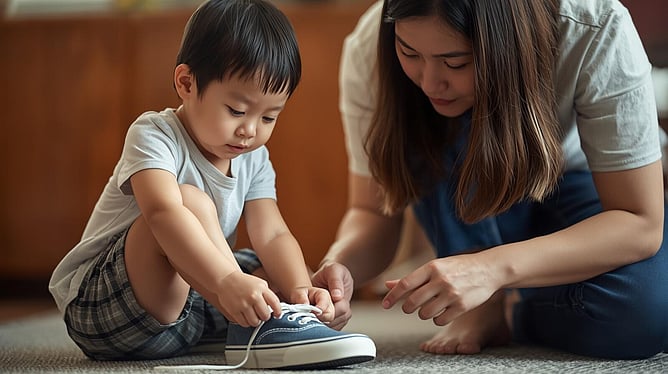
Self-care tasks like dressing, brushing teeth, and feeding, are everyday achievements that build independence and confidence. For some children, these skills take longer to develop. When self-care feels hard, it can affect routines at home, transitions to school, and a child’s sense of “I can do it myself.”
Recently, we worked with a young child who found morning routines especially challenging. Getting dressed often led to frustration. Buttons were tricky. Toothbrushing felt overwhelming. The rush of the morning made everyone feel stressed.
This wasn’t about motivation. It was about skills.
Through children’s occupational therapy, we broke self-care into small, achievable steps. Sessions focused on:
Strengthening fine motor control for fasteners
Building sequencing skills for routines
Practising dressing through playful activities
Using visuals to support predictability
Developing sensory strategies to reduce overwhelm
Instead of rehearsing tasks only at the sink or wardrobe, we practised through games. Zippers became obstacle challenges. Toothbrushing turned into rhythm and timing activities. Dressing skills were embedded in pretend play.
Over time, the child began initiating steps independently. Morning routines became calmer. Success built confidence—not just in self-care, but across the day.
Why Self-Care Skills Matter
Self-care is more than hygiene and clothing. It supports:
Independence
Emotional regulation
Participation at school
Family routines
A child’s belief in their own abilities
In paediatric occupational therapy, we look beyond the task itself. We explore the motor, sensory, and cognitive skills underneath. When those foundations are supported, everyday milestones become achievable.
At Integral Occupational Therapy in Chatswood, we support children across the North Shore to build self-care skills in ways that feel playful, respectful, and achievable. Progress often happens in small steps—but those steps add up to meaningful independence.
For families navigating self-care challenges, support can make daily routines feel lighter and more manageable. And for children, each success becomes a reminder:
“I can do this.”